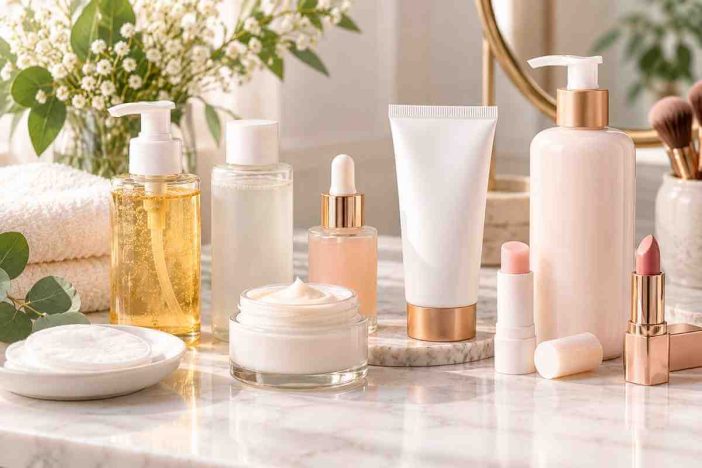
Beauty products do not need to fill an entire bathroom cabinet to be useful. A well-chosen routine can be surprisingly small when each product has a clear purpose and fits your skin, lifestyle, and personal preferences.
The phrase “beauty products every woman should have” can sound as if everyone needs the same shopping list. In reality, there is no universal kit. Someone who rarely wears makeup needs different products from someone who uses cosmetics every day, while sensitive, dry, oily, and acne-prone skin all have different priorities.
Quick Answer
The most useful beauty kit usually starts with a gentle cleanser, moisturizer, broad-spectrum sunscreen, lip balm, and—when needed—a reliable makeup remover. Body moisturizer, exfoliants, targeted serums, concealer, and color cosmetics can be added according to your actual needs.
The goal is not to own more products. It is to own fewer products that you understand and will actually use.
What Makes a Beauty Product Truly Essential?
An essential product should solve a recurring need.
That may mean removing dirt and makeup, supporting skin hydration, protecting exposed skin from ultraviolet radiation, keeping dry lips comfortable, or helping you address one specific concern.
This distinction matters because beauty shelves are full of products marketed as necessities even when they simply duplicate something already in your routine.
If you are still building the basic sequence of cleansing, moisturizing, treatment, and protection, start with our guide to a practical skin care routine before adding more products.
1. A Gentle Facial Cleanser
A cleanser earns the first place because almost every routine begins with clean skin.
Its job is straightforward: remove excess oil, sweat, environmental debris, and products left on the skin without leaving your face feeling excessively tight or uncomfortable.
A stronger cleanser is not automatically a better cleanser. If your face feels stripped after every wash, the formula may simply be too aggressive for your skin.
Dry and sensitive skin often does better with a mild cream or lotion cleanser. Oily skin may prefer a lightweight gel cleanser, but gentleness still matters.
You do not need a cleanser that promises ten additional benefits. A basic product that cleans comfortably and consistently can be more useful than a complicated formula you dislike using.
2. A Moisturizer That Matches Your Skin
Moisturizer is not reserved for dry skin.
The right moisturizer helps reduce water loss and supports the skin’s protective barrier. The important part is choosing a texture that works for you.
Someone with oily skin may prefer a light lotion or gel-cream. Dry skin often benefits from a richer cream. Sensitive skin usually does better with a simpler formula containing fewer potential irritants.
Instead of choosing moisturizer based on packaging or trends, pay attention to how your skin feels several hours after application.
A good moisturizer should make your routine easier, not leave you constantly trying to correct excessive dryness, heaviness, or irritation.
3. Broad-Spectrum Sunscreen
If you are deciding where to spend your beauty budget, sunscreen deserves priority over many trend-driven products.
Daily UV exposure contributes to sunburn, uneven pigmentation, and visible skin aging. For everyday use, look for broad-spectrum protection and choose a formula comfortable enough that you will apply it consistently.
Texture matters more than many people realize. A sunscreen that feels unpleasant is likely to stay in the bottle.
People with acne-prone skin sometimes struggle to choose among different filters and finishes. Our guide to mineral vs chemical sunscreen for acne-prone skin explores those options in more detail.
Whatever format you choose, sunscreen should complement the rest of your routine rather than force you to rebuild everything around it.
4. Lip Balm
Lip balm is one of the simplest products on this list, but it is also one of the easiest to use consistently.
The lips can become dry from weather, indoor air, repeated licking, certain lip products, and everyday environmental exposure.
A basic balm can reduce uncomfortable dryness and create a smoother base if you later apply lipstick or another lip color.
You do not necessarily need an elaborate lip treatment. If a straightforward balm keeps your lips comfortable, it is doing its job.
For daytime outdoor use, a lip product that also provides sun protection can be particularly practical.
5. Makeup Remover or First-Step Cleanser
If you wear makeup, water-resistant sunscreen, or long-wear complexion products, a dedicated first cleansing step can make your evening routine easier.
This might be micellar water, cleansing oil, cleansing balm, or another remover compatible with your skin.
The objective is not to scrub until the face feels squeaky clean. It is to loosen products so they can be removed gently.
People who wear little or no makeup may not need a separate remover at all. This is a good example of why a personalized beauty kit is better than a universal shopping checklist.
Buy it because your routine requires it—not simply because it appears on someone else’s shelf.
6. Body Moisturizer
Facial skincare receives most of the attention, but the rest of your skin also deals with cleansing, dry air, friction, weather, and sun exposure.
A body lotion or cream can be particularly useful on areas that frequently become rough or dry, such as hands, elbows, knees, and lower legs.
Texture can change with the season. A lightweight lotion may feel comfortable during warm, humid weather, while a richer cream may be more useful when the air becomes dry.
Apply it where you actually need it rather than treating body care as another complicated multi-step routine.
7. An Exfoliant—Only If Your Skin Benefits From One
The older version of this article treated an exfoliator as something every woman should own. That is too simplistic.
Exfoliation can be useful for some people, but it is not an everyday requirement and more exfoliation is not necessarily better.
Physical scrubs, exfoliating acids, and other resurfacing products can all cause irritation when they are used too aggressively or combined carelessly with other active ingredients.
If your basic routine already leaves your skin comfortable and smooth, there is no reason to add an exfoliant just because it is popular.
If you do use one, introduce it gradually and watch how your skin responds.
8. One Targeted Serum or Treatment
Serums are where beauty routines can become expensive very quickly.
Instead of collecting multiple bottles, identify one concern first.
For example, someone concerned about dullness or uneven tone may consider an antioxidant product. Someone with oily or blemish-prone skin may prioritize ingredients suited to that concern. Someone whose main issue is dryness may get more value from improving moisturizer rather than buying another serum.
If vitamin C is the ingredient you are considering, our guide to vitamin C serum skincare explains how it fits into a routine.
The key principle is simple: introduce treatments because they solve a defined problem, not because a social-media routine contains them.
9. Concealer or a Lightweight Complexion Product
Makeup is optional, not a requirement for healthy skin.
Still, a concealer, tinted moisturizer, or lightweight complexion product can be useful if you enjoy evening out your appearance without building a large makeup collection.
Choose the format based on what you want to cover and how much coverage you actually like.
Someone who only occasionally conceals a blemish or under-eye discoloration may get more use from a small concealer than from foundation, primer, powder, and several additional complexion products.
This is where a minimalist approach can save both money and unused products.
10. A Lip Color You Will Actually Wear
The original versions of this article included lipstick among the core beauty products, and it remains one of the few traditional cosmetics worth keeping on the list—with one important condition.
It should be something you genuinely enjoy wearing.
That might be lipstick, tinted balm, gloss, or nothing at all.
Color cosmetics serve a different purpose from cleanser, moisturizer, and sunscreen. They are about expression rather than skin maintenance, so they should never be treated as mandatory.
One reliable shade you enjoy may be more useful than a drawer full of colors you rarely reach for.
Beauty Products You May Not Need
Some products from older beauty checklists sound essential simply because they have been marketed that way for years.
Toner is a good example. Modern routines do not automatically require it. If your cleanser and moisturizer already work well, toner may add little.
Eye cream is another optional category. Some people enjoy a separate formula around the eyes, while others use a suitable facial moisturizer in that area.
A flat iron, epilator, and hair dryer can certainly be useful beauty tools, but they are lifestyle-dependent rather than universal essentials.
The same applies to multiple serums, facial mists, primers, masks, separate day and night creams, and specialized tools.
A product becomes essential when it repeatedly solves a problem for you—not when a list declares that everyone should own it.
How to Build a Beauty Kit for Sensitive Skin
Sensitive or easily irritated skin benefits from restraint.
Start with a gentle cleanser, straightforward moisturizer, comfortable sunscreen, and lip balm. Add other products gradually instead of introducing several formulas at the same time.
Fragrance, strong exfoliation, and complex combinations of active ingredients can make it difficult to identify what triggered a reaction.
If sensitivity is already a recurring concern, see our complete skincare routine for sensitive skin before expanding your routine.
A smaller collection also makes troubleshooting much easier.
How to Stop Wasting Money on Beauty Products
Before buying something new, ask what job the product will perform.
Then ask whether something you already own performs the same job.
This simple exercise can prevent duplicate cleansers, overlapping serums, unnecessary moisturizers, and products purchased mainly because they were trending.
It also helps to introduce one new product at a time. If you change cleanser, serum, moisturizer, and sunscreen during the same week, you may have difficulty identifying what helped—or what caused irritation.
Pay attention to packaging size as well. A smaller product you finish is usually a better purchase than a large bottle that expires at the back of a cabinet.
Most importantly, be skeptical of words such as “miracle,” “instant,” “permanent,” and “age reversing.” Good skincare usually produces gradual results, and no cosmetic cream can guarantee that you will look a specific number of years younger.
What Should You Buy First?
If you are starting from zero, do not buy ten products at once.
Begin with cleansing, moisturizing, and daytime sun protection. Add lip care if you need it.
Once those basics work comfortably, decide whether you actually have another problem worth addressing.
This order makes it easier to separate needs from marketing.
Do You Really Need a 10-Step Beauty Routine?
No.
The number of products in a routine says very little about its quality.
Some people are perfectly comfortable with three or four products. Others may need additional treatments for acne, pigmentation, sensitivity, dryness, or another specific concern.
Consistency and suitability matter more than the size of the collection.
Is Toner Necessary?
Not for everyone.
Toner can provide hydration or deliver specific ingredients, but it is not an obligatory step between cleansing and moisturizing.
If your current routine works without one, there is no need to add toner simply to complete a traditional sequence.
Is Eye Cream Necessary?
Not always.
A dedicated eye product may be useful if you prefer its texture or want an ingredient formulated specifically for the eye area. But a separate eye cream is not a universal requirement.
The surrounding skin is delicate, so whatever you use should be comfortable and non-irritating.
Can Makeup Be Part of a Skin-Healthy Routine?
Yes.
Makeup and skin health are not mutually exclusive.
Choose products that suit your skin, avoid continuing to use anything that repeatedly causes irritation, and remove makeup gently at the end of the day.
Tools such as brushes and sponges should also be kept reasonably clean, especially if you use them frequently.
Bottom Line
The best list of beauty products every woman should have is not really a list of products that every woman must buy.
It is a framework for choosing what deserves space in your routine.
Start with the essentials that support clean, comfortable, protected skin: cleanser, moisturizer, sunscreen, lip care, and a makeup-removal step when necessary. Add body care, exfoliation, serums, and cosmetics only when they serve a clear purpose.
A smaller, deliberate collection is often easier to use consistently, easier to evaluate, and less likely to leave you with expensive products that never become part of your routine.
Your beauty kit should fit your skin and your life—not someone else’s shelf.