
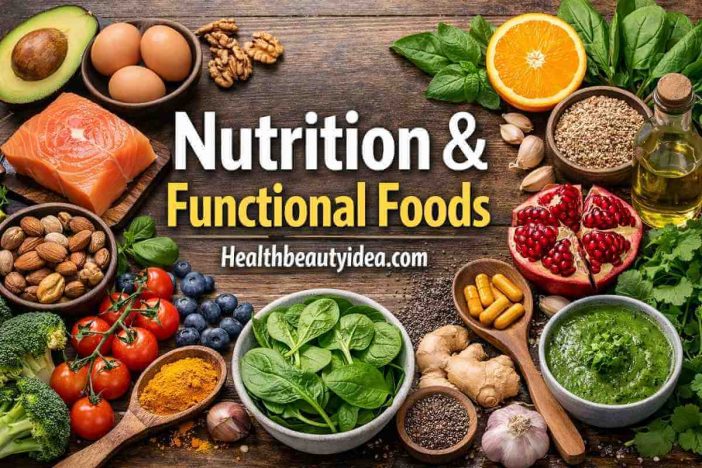
Evidence-Informed Nutrition for Long-Term Health, Energy, and Metabolic Balance
Nutrition & Functional Foods explores how everyday foods—when chosen and combined strategically—can support metabolic health, gut balance, heart health, and overall vitality.
This hub is designed as a food-first, evidence-informed resource, focusing on how foods work in the body, not on fads, miracle claims, or short-term trends.
Our goal is simple:
to help readers make smarter, safer, and more sustainable nutrition decisions using practical frameworks grounded in nutritional science.
What Are Functional Foods?
Functional foods are foods that provide health benefits beyond basic nutrition due to their natural compounds—such as fiber, polyphenols, omega-3s, resistant starch, or probiotics.
Unlike supplements or medications, functional foods:
- Are consumed as part of daily meals
- Work cumulatively over time
- Support body systems rather than “treat” diseases
In this section, we focus on how to use foods strategically, not on medical claims.
Start Here: Our Core Nutrition Frameworks
🧠 Food-First Nutrition Philosophy
We prioritize whole foods, quality carbohydrates, healthy fats, and dietary patterns that are realistic, scalable, and safe for long-term use.
You will find guidance on:
- Food quality vs food marketing claims
- Meal composition and timing
- Label reading and ingredient transparency
🔥 Metabolic Health Nutrition
Metabolic health is the foundation of energy balance, weight stability, and blood-sugar regulation.
This cluster focuses on:
- Glycemic-friendly foods
- Fiber-rich eating patterns
- Practical meal frameworks (not restrictive diets)
Recommended starting points:
- Blood sugar–friendly meal planning
- High-fiber foods and daily intake guidance
- Low-glycemic breakfast and lunch ideas
🦠 Gut Health & Digestive Nutrition
Gut health influences digestion, immunity, inflammation, and even mood.
In this section, you’ll learn about:
- Prebiotic vs probiotic foods
- Fermented foods and when they help
- Digestive comfort and fiber diversity
Key topics include:
- Prebiotic food lists
- Fermented foods explained
- Fiber types and digestive tolerance
❤️ Heart-Healthy Functional Foods
Dietary patterns strongly influence cardiovascular health over time.
This cluster covers:
- Cholesterol-supportive foods
- Omega-3 sources from food
- Anti-inflammatory eating patterns
All guidance emphasizes risk reduction and support, not medical treatment.
🌿 Anti-Inflammatory & Longevity Nutrition
Chronic low-grade inflammation is linked to many modern health challenges.
Here we focus on:
- Polyphenol-rich foods
- Herbs and spices with nutritional relevance
- Sustainable anti-inflammatory eating patterns
Healthy Snacks.
If you want the most practical entry point, start with our Healthy Snacks guide—framework + recipes you can use immediately.
Nutrition Glossary & Evidence Guides
To support clarity and trust, we provide plain-language explanations of commonly misunderstood terms, such as:
- Glycemic index vs glycemic load
- Prebiotics vs probiotics
- Resistant starch
- Polyphenols
- Dietary fiber types
Each guide explains:
- What the term means
- Why it matters
- How it applies in everyday eating
How We Create and Review Nutrition Content
All content in this hub follows a strict editorial approach:
- Evidence-informed, not trend-driven
- Based on reputable nutrition science sources
- Reviewed for clarity, safety, and practical use
- Regularly updated as guidelines evolve
This site does not replace medical advice.
For medical conditions, readers are encouraged to consult qualified healthcare professionals.
Who This Hub Is For
This section is designed for:
- Readers seeking long-term, sustainable nutrition guidance
- Individuals interested in food quality, not diet extremes
- Anyone looking to understand why foods matter, not just what to eat
It is not designed for:
- Crash diets or quick fixes
- Supplement-only solutions
- Unverified or sensational nutrition claims
Explore Nutrition & Functional Foods
Use this hub as your central starting point.
Each article links deeper into structured guides, comparisons, and practical frameworks—allowing you to learn progressively, without overwhelm.
Start with the core frameworks, then move into focused topics that match your goals.
Explore More in This Category
- Micronutrient Deficiencies Explained: Causes, Symptoms, Food Sources, and Long-Term Health Impact ♔
- Healthy Eating Explained: The Evidence-Based Guide to Building a Balanced Diet for Life ♔
- Plant-Based Diet Guide: 7 Powerful Health Benefits
- Mediterranean Diet Health Benefits: 7 Incredible Secrets
- Benefits of Leafy Greens: 10 Powerful Reasons to Eat Daily
- Nutritional Benefits of Blueberries: 7 Amazing Health Perks
- Garlic and Human Health: Evidence-Based Benefits, Daily Use, and What Most Articles Get Wrong ♔
- Antioxidant-Rich Foods: 10 Powerful Benefits for a Healthier You
- Top Anti-Inflammatory Foods: 9 Miraculous Superfoods to Instantly End Pain
- Health Benefits of Turmeric: 7 Powerful Reasons You’ll Love It
- Top 10 Best Foods for Hormone Balance: Boost Your Health Naturally
- Daily Dose Superfoods for Motherhood: Boost Energy, Immunity, and Mood Naturally
- Minimally Processed Organic Deli Meat: 7 Shocking Benefits
- Chocolate Protein Shake: 7 Incredible Benefits for Amazing Results
- Are Protein Shakes Good for You? 7 Shocking Truths Revealed!
- Processed Meat Alternatives: 7 Powerful & Healthy Choices You’ll Love!
- Intermittent Fasting and Gut Health: Transform Your Digestive Wellness Today
- Intermittent Fasting and Longevity: Unlock the Secret to a Longer, Healthier Life
- Best Foods to Eat During Intermittent Fasting: Boost Your Results and Stay Energized
- What Is Carbonated Water? Discover Its Surprising Benefits and Risks
- Top 8 Best Protein Shake Recipes for Every Goal
- Healthy Fast Food: Delicious Choices That Won’t Ruin Your Diet
- Is Carbonated Water Bad for You? Unveiling the Health Benefits and Potential Drawbacks
- What to Look for in a Protein Shake: Your Ultimate Guide to Healthier Choices
- Oats in Protein Shake: Boost Your Health with This Power Combo
- Worst Ultra Processed Foods You Should Avoid at All Costs
- Ultra Processed Foods: Why They’re Harmful and How to Avoid Them
- Chia in Protein Shake: Boost Your Nutrition with This Power Combo
- Protein Shake in the Morning: The Ultimate Kickstart for Your Day
- Protein in Whey Protein Shake: Benefits and How to Maximize Its Potential

 Skincare Solutions & Skin Health
 Mental Health, Stress & Emotional Wellbeing
 Sleep, Energy & Daily Performance