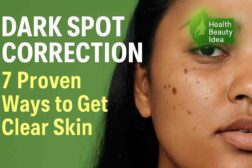

Hyperpigmentation can develop after sun exposure, acne, irritation, inflammation, hormonal changes, or other triggers. Vitamin C is one over-the-counter ingredient that may help improve the appearance of uneven pigmentation, but choosing an effective serum involves more than looking for the highest percentage on the label.
The best vitamin C serum for hyperpigmentation should combine an appropriate form of vitamin C with a stable formulation, suitable concentration, protective packaging, and ingredients that your skin can tolerate. Sunscreen remains equally important because continued ultraviolet and visible-light exposure can darken existing pigmentation and contribute to new spots.
This guide compares seven vitamin C serums based on their formulation, vitamin C form and concentration when disclosed, supporting ingredients, packaging, skin-type suitability, and current manufacturer information. The products are presented as options to consider rather than guaranteed treatments for dark spots.
Can Vitamin C Help With Hyperpigmentation?
Vitamin C has antioxidant and pigment-modulating properties that make it relevant to hyperpigmentation care. Research suggests that topical vitamin C can help improve uneven pigmentation, although results vary substantially between formulations and individuals.
L-ascorbic acid is the most extensively studied form of topical vitamin C. Other derivatives are often used to improve stability or tolerability, but they do not all have the same amount of clinical evidence.
How well a vitamin C serum performs depends on several factors:
- Vitamin C form: L-ascorbic acid has substantial clinical evidence, while derivatives differ in stability, skin penetration, and supporting data.
- Concentration: More is not always better. Higher concentrations may increase irritation without guaranteeing better results.
- Formulation and pH: These influence stability and how effectively the active ingredient reaches the skin.
- Packaging: Exposure to light and air can accelerate oxidation, especially with L-ascorbic acid.
- Skin tolerance: Irritation itself can worsen post-inflammatory hyperpigmentation in some people, so tolerability matters.
- Sun protection: Treating dark spots without controlling UV and visible-light exposure can limit improvement.
The American Academy of Dermatology includes vitamin C among over-the-counter ingredients that may help fade dark spots. However, it also emphasizes that effective hyperpigmentation care begins with sun protection.
For people prone to dark spots, particularly those with darker skin tones or melasma, a broad-spectrum SPF 30 or higher is important. A tinted sunscreen containing iron oxides can also help protect against visible light, which can worsen pigmentation.
If you want a broader overview of treatment options beyond vitamin C, see our guide to dark spot correction, which covers additional approaches to uneven pigmentation.
How to Choose the Right Vitamin C Serum
When it comes to the best vitamin C serum for hyperpigmentation, choosing the right product is half the battle. Consider:
- Concentration – 10–20% is optimal for fading dark spots without irritating skin.
- Form – Look for L-ascorbic acid (most effective), or stabilized versions like sodium ascorbyl phosphate.
- Packaging – Dark glass bottles protect against oxidation.
- Added Ingredients – Hyaluronic acid (hydration), ferulic acid (stability), or Vitamin E (synergy) enhance performance.
Since Vitamin C plays a key role in collagen production, you may also be interested in learning how to boost collagen naturally, which can further enhance skin firmness and elasticity.
How We Evaluated These Vitamin C Serums
We evaluated these products using criteria that matter specifically for hyperpigmentation rather than ranking them by popularity alone.
Our main criteria included:
- Form of vitamin C: We considered whether the formula uses L-ascorbic acid or a vitamin C derivative and how much evidence supports that form.
- Concentration: When manufacturers disclose the percentage, we considered whether it is appropriate for the formulation rather than assuming that a higher percentage is automatically better.
- Stability: Vitamin C can degrade when exposed to light, air, heat, or an unsuitable formulation.
- Packaging: Opaque, tinted, air-restrictive, or otherwise protective packaging can help reduce degradation.
- Supporting ingredients: Ingredients such as vitamin E, ferulic acid, hydrating agents, or other pigment-supporting actives may influence the overall formula.
- Skin-type suitability: We considered potential irritation, fragrance, texture, and whether a product may be more appropriate for sensitive, oily, dry, or acne-prone skin.
- Manufacturer transparency: Claims, ingredients, concentrations, and product specifications should be supported by current manufacturer information where possible.
- Evidence quality: We distinguish between evidence for vitamin C as an ingredient and evidence for a specific finished serum. These are not always the same.
We have not assumed that any serum can completely remove hyperpigmentation or produce results within a guaranteed number of weeks. Persistent, worsening, or unexplained pigmentation may require evaluation by a dermatologist.
Editorial note: Cosmetic formulas, ingredient lists, concentrations, packaging, and product availability can change. Check the current manufacturer label before purchasing.
7 Vitamin C Serums to Consider for Hyperpigmentation
The following vitamin C serums were selected based on formulation, vitamin C type, supporting ingredients, stability, packaging, skin-type suitability, and current manufacturer information. They are presented as options to consider rather than as guaranteed treatments or a universal ranking.
1. SkinCeuticals Phloretin CF
SkinCeuticals Phloretin CF is a daytime antioxidant serum formulated with 10% pure L-ascorbic acid, 2% phloretin, and 0.5% ferulic acid. Among SkinCeuticals vitamin C serums, this formula is particularly relevant to hyperpigmentation because the manufacturer specifically positions it for discoloration and uneven skin tone.
The combination is designed to provide antioxidant protection while improving the visible appearance of dark spots and uneven pigmentation.
Why consider it:
- 10% pure L-ascorbic acid
- 2% phloretin
- 0.5% ferulic acid
- Specifically formulated for discoloration and uneven skin tone
- Fragrance-free and dye-free
- Suitable for normal, oily, and combination skin according to the manufacturer
Considerations:
- It is a premium-priced serum.
- L-ascorbic acid can still irritate sensitive skin, so gradual introduction may be appropriate.
- The formula can darken after opening as vitamin C is exposed to air and light.
- It should not replace sunscreen or other treatment when pigmentation is persistent or medically significant.
2. CeraVe Skin Renewing Vitamin C Serum
CeraVe Skin Renewing Vitamin C Serum contains 10% pure vitamin C in the form of L-ascorbic acid. It also includes three essential ceramides, hyaluronic acid, and vitamin B5 to support hydration and the skin barrier.
The serum is packaged to help limit oxidation and is formulated without added fragrance. CeraVe lists it as suitable for all skin types, including sensitive skin, although individual tolerance to L-ascorbic acid can still vary.
Why consider it:
- 10% pure L-ascorbic acid
- Includes three essential ceramides
- Contains hyaluronic acid and vitamin B5
- Fragrance-free
- Non-comedogenic
- Protective packaging designed to help maintain vitamin C stability
- Suitable for sensitive skin according to the manufacturer
Considerations:
- Sensitive skin can still react to active vitamin C despite the product’s gentle positioning.
- It is primarily marketed as a brightening and antioxidant serum rather than a dedicated treatment for severe hyperpigmentation.
- Ingredient lists can change, so check the current packaging before purchasing.
- Daily sunscreen remains necessary when treating dark spots.
3. La Roche-Posay Vitamin C12 Serum
La Roche-Posay Vitamin C12 Serum contains 12% pure vitamin C in the form of L-ascorbic acid, along with salicylic acid, neurosensine, glycerin, and hyaluronic acid.
The formula is designed primarily to improve radiance, uneven-looking texture, and visible signs of skin aging. Because it contains pure vitamin C, it may also be relevant to a routine for uneven pigmentation, although it should not be considered a dedicated treatment for melasma or persistent dark spots.
Why consider it:
- 12% pure L-ascorbic acid
- Contains salicylic acid
- Includes glycerin and hyaluronic acid
- Allergy tested
- Non-comedogenic
- Suitable for sensitive skin according to the manufacturer
- Designed to improve radiance and uneven-looking skin texture
Considerations:
- The formula contains fragrance and denatured alcohol, which may not suit every sensitive skin type.
- Salicylic acid plus L-ascorbic acid may feel more active than simpler vitamin C formulas.
- It is marketed primarily as an anti-aging and radiance serum rather than a hyperpigmentation-specific treatment.
- Introduce it gradually if your skin is reactive, and use sunscreen during the day.
4. TruSkin Vitamin C Serum
TruSkin Vitamin C Serum uses sodium ascorbyl phosphate (SAP), a stable vitamin C derivative, rather than pure L-ascorbic acid. The formula also includes hyaluronic acid, vitamin E, aloe, jojoba oil, and several botanical extracts.
SAP may appeal to people who find low-pH L-ascorbic acid serums irritating. TruSkin positions this serum for dullness, uneven tone, and dark spots, although the evidence base for SAP is not as extensive as the evidence for L-ascorbic acid.
Why consider it:
- Uses sodium ascorbyl phosphate, a stable vitamin C derivative
- Includes hyaluronic acid
- Contains vitamin E
- Includes aloe and jojoba oil
- Lightweight texture
- Designed for dullness, uneven tone, and dark spots
- May be easier to tolerate than some acidic L-ascorbic acid formulas
Considerations:
- SAP has less clinical evidence for hyperpigmentation than L-ascorbic acid.
- The manufacturer does not disclose a vitamin C percentage on the current product page.
- Botanical ingredients may not suit every reactive skin type.
- Do not assume that “gentler” means more effective for stubborn pigmentation.
5. Paula’s Choice C15 Brightening Super Booster
Paula’s Choice C15 Brightening Super Booster is formulated with 15% vitamin C along with vitamin E and ferulic acid. This combination is relevant for people who want a relatively high-strength antioxidant serum that also targets dullness and uneven-looking skin tone.
The formula can be used alone or mixed with another compatible serum or moisturizer, but a 15% vitamin C product may be more active than lower-strength options for people who are new to topical vitamin C.
Why consider it:
- 15% vitamin C
- Includes vitamin E
- Contains ferulic acid
- Lightweight serum texture
- Designed to address dullness and uneven-looking skin tone
- Suitable for people who already tolerate topical vitamin C well
Considerations:
- A 15% vitamin C formula may cause stinging or irritation in reactive skin.
- Higher concentration does not automatically mean faster fading of hyperpigmentation.
- Vitamin C stability remains important, so follow the manufacturer’s storage instructions and avoid unnecessary exposure to heat and light.
- Sunscreen is still necessary when treating uneven pigmentation.
6. Olay Vitamin C Brightening Serum
Olay Vitamin C Brightening Serum, part of the Vitamin C + Peptide 24 range, uses 3-O-ethyl ascorbic acid, a stabilized vitamin C derivative. The formula also contains niacinamide, lactic acid, palmitoyl pentapeptide-4, panthenol, and hydrating ingredients.
This combination makes the serum relevant for people concerned with dullness and uneven-looking skin tone. Niacinamide and lactic acid may provide additional support for the appearance of pigmentation, although the finished product should not be treated as a guaranteed dark-spot treatment.
Why consider it:
- Uses a stabilized vitamin C derivative
- Contains niacinamide
- Includes lactic acid
- Contains palmitoyl pentapeptide-4
- Includes panthenol
- Designed for dullness and uneven skin tone
- Lightweight serum formulation
Considerations:
- The formula contains fragrance, which may not suit very sensitive or fragrance-reactive skin.
- Olay does not disclose the vitamin C percentage on the current product page.
- Evidence for a finished cosmetic formula is not the same as evidence for each individual ingredient.
- Daily sunscreen remains essential when addressing hyperpigmentation.
7. Murad Vita-C Glycolic Serum
Murad Vita-C Glycolic Serum combines a stabilized form of vitamin C with glycolic acid. The formula is designed to improve dullness, uneven-looking skin tone, and surface texture while providing antioxidant support.
Unlike Murad Rapid Dark Spot Correcting Serum, which relies primarily on resorcinol technology, tranexamic acid, and glycolic acid, Vita-C Glycolic Serum is the more appropriate choice for this vitamin C-focused guide.
Why consider it:
- Uses stabilized vitamin C
- Contains glycolic acid
- Designed for dullness and uneven skin tone
- Provides antioxidant support
- Suitable for balanced, oily, combination, and dry skin according to the manufacturer
- Relevant for people who want both brightening and gentle surface exfoliation
Considerations:
- Glycolic acid may cause temporary tingling or irritation, especially in sensitive skin.
- Combining exfoliating acids with other strong actives may increase irritation.
- It should be introduced gradually if your routine already contains retinoids or other exfoliants.
- Daily sunscreen is essential when using glycolic acid and when treating hyperpigmentation.
How to Use Vitamin C Serum for Hyperpigmentation
Vitamin C works best as one part of a consistent hyperpigmentation routine rather than as a stand-alone solution. How often you use it should depend on the formula, your skin tolerance, and the manufacturer’s directions.
Start Gradually if Your Skin Is Sensitive
If you are new to vitamin C—particularly an acidic L-ascorbic acid formula—consider starting several times per week before increasing to daily use.
Mild tingling can occur with some formulas, but persistent burning, redness, itching, or worsening irritation is a reason to stop and reassess the product.
Morning or Evening Can Both Work
Vitamin C does not become ineffective simply because it is applied at night. Many people use antioxidant vitamin C in the morning because it can complement daytime sun protection, while others prefer evening application because of their routine or skin tolerance.
Consistency and tolerability matter more than forcing the product into a particular time of day.
Apply Sunscreen Every Day
Sun protection is fundamental when treating hyperpigmentation. Apply a broad-spectrum, water-resistant sunscreen with SPF 30 or higher during the day.
For people prone to melasma or persistent dark spots, especially those with darker skin tones, a tinted sunscreen containing iron oxides can provide additional protection from visible light, which can contribute to pigmentation.
Layer From Lighter to Heavier Products
A simple morning routine may look like:
Cleanser → Vitamin C serum → Moisturizer → Sunscreen
You do not need a toner for vitamin C to work. Allowing each product to absorb comfortably before applying the next can make the routine easier to tolerate.
Be Careful When Combining Strong Actives
Vitamin C can be used in the same overall skincare routine as ingredients such as retinoids, exfoliating acids, azelaic acid, or niacinamide. However, combining several irritating products at once can increase dryness, stinging, or inflammation.
If irritation develops, consider separating stronger actives between morning and evening or using them on alternate days.
Follow the Manufacturer’s Storage Instructions
Vitamin C stability depends heavily on the form of vitamin C, packaging, pH, and formulation. Keep the container tightly closed and protect it from unnecessary heat, air, and direct light.
Refrigeration is not universally required. Follow the storage directions provided for the specific serum rather than automatically refrigerating every vitamin C product.
Do Not Expect a Fixed Timeline
Hyperpigmentation does not fade at the same rate for everyone. The cause of the pigmentation, its depth, sun exposure, skin tone, formulation used, and consistency of treatment all influence the result.
Avoid judging a serum solely by claims such as “visible results in 7 days” or “dark spots gone in 4 weeks.” Persistent or worsening pigmentation may require evaluation by a dermatologist.
FAQs About Vitamin C Serum and Hyperpigmentation
Can vitamin C completely remove dark spots?
Not necessarily. Vitamin C may help fade the appearance of some types of hyperpigmentation, but results depend on the cause and depth of the pigmentation, the formulation used, sun protection, and individual skin response.
Some dark spots can persist despite over-the-counter skincare. Melasma, recurring pigmentation, or unexplained changes may require professional evaluation and additional treatment.
Can I use vitamin C with retinol?
Yes, many people can use vitamin C and a retinoid within the same skincare routine. They do not have to be universally separated because of an ingredient “conflict.”
However, both can irritate some skin types. If using them together causes dryness, burning, or redness, consider using vitamin C in the morning and the retinoid at night, or alternate them on different days.
How long does vitamin C take to improve hyperpigmentation?
There is no guaranteed timeline. Improvement may take weeks to months and depends on the type and depth of pigmentation, vitamin C formulation, consistency, sun exposure, and other treatments being used.
The American Academy of Dermatology notes that some dark spots can naturally take 6–12 months to fade, while deeper discoloration may take considerably longer. Treatment can help, but a serum should not promise that every dark spot will disappear within a fixed number of weeks.
Is a higher vitamin C percentage always better?
No. A higher concentration does not automatically produce better results. Formulation stability, pH, vitamin C form, packaging, and skin tolerance all influence performance.
A lower-strength product that your skin tolerates consistently may be more useful than a stronger formula that repeatedly causes irritation.
Should I stop using vitamin C if the serum changes color?
Follow the manufacturer’s guidance for the specific formula. L-ascorbic acid is inherently unstable and can oxidize with exposure to air, heat, and light, but formulations differ in how they are stabilized and packaged.
A major change in color, odor, or texture can be a reason to check the manufacturer’s instructions or replace the product rather than continuing to use it automatically.
Bottom Line
Vitamin C can be a useful ingredient for uneven pigmentation, but no serum is guaranteed to remove every dark spot. The best choice depends on the form of vitamin C, formulation stability, supporting ingredients, packaging, skin tolerance, and the cause of the pigmentation.
L-ascorbic acid has the strongest clinical track record, while stabilized derivatives may be easier to formulate or tolerate but differ in the amount of supporting evidence.
Whichever serum you choose, consistent sun protection remains fundamental. Persistent, recurrent, or unexplained pigmentation—especially melasma or changes that do not respond to over-the-counter skincare—may need evaluation by a dermatologist.
Product formulas can change, so confirm the current ingredient list and manufacturer information before purchasing.