
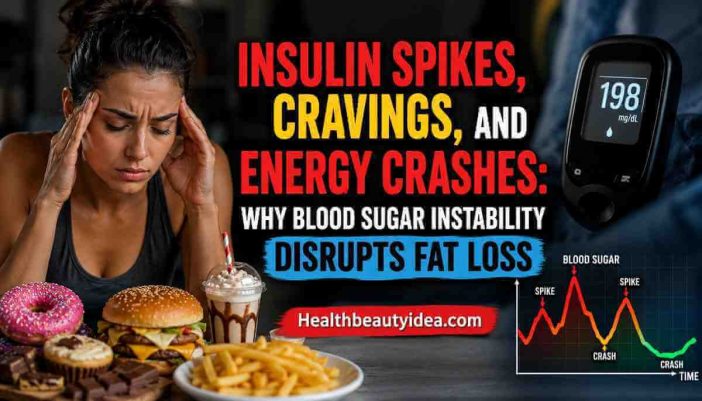
A bowl of sugary cereal. A flavored coffee on the drive to work. Maybe a pastry between meetings. By 2 PM, concentration collapses, cravings intensify, and another snack suddenly feels necessary.
Many people interpret this pattern as lack of discipline.
Metabolic physiology suggests something else may be happening.
The body is constantly trying to stabilize blood glucose levels. When food patterns repeatedly create rapid glucose surges followed by steep drops, the result can become a cycle of:
- cravings,
- fatigue,
- mood instability,
- rebound hunger,
- and overeating.
This is not simply about “eating too much sugar.” It is about how modern eating patterns interact with insulin signaling, appetite hormones, stress physiology, and metabolic regulation.
What Is an Insulin Spike?
An insulin spike occurs when blood glucose rises rapidly and the pancreas releases larger amounts of insulin to help move glucose into cells.
Insulin itself is not the enemy.
The body needs insulin for:
- energy regulation,
- nutrient storage,
- muscle maintenance,
- and survival.
Problems tend to emerge when:
- glucose swings become frequent,
- meals are highly refined,
- eating patterns become chaotic,
- sleep deteriorates,
- and insulin signaling becomes chronically dysregulated.
Quick Answer
Insulin spikes happen when blood sugar rises rapidly after eating, especially after highly refined or sugary meals. Repeated glucose spikes and crashes may increase cravings, energy instability, hunger, and fat storage while making appetite regulation harder over time.
Why Blood Sugar Swings Affect Hunger So Strongly
The human brain depends heavily on stable energy availability.
When blood sugar drops rapidly after a large spike, the body may interpret the shift as an energy threat.
This can trigger:
- intense hunger,
- sugar cravings,
- irritability,
- shakiness,
- mental fatigue,
- difficulty concentrating.
Many people describe this as:
“I suddenly crashed.”
In reality, the body may be reacting to unstable glucose regulation rather than true calorie deficiency.
The Modern Food Environment Amplifies the Problem
Ultra-processed foods are often:
- rapidly digested,
- low in fiber,
- engineered for hyper-palatability,
- and easy to overconsume.
This combination can accelerate:
- glucose spikes,
- insulin release,
- reward-driven eating behavior.
A meal that lacks:
- protein,
- fiber,
- healthy fats,
- or structural satiety
may create short-term fullness followed by rapid rebound hunger.
Why Cravings Often Feel Urgent
Cravings are not always psychological weakness.
Blood sugar instability can increase:
- reward sensitivity,
- appetite signaling,
- dopamine-driven food seeking.
This is especially noticeable after:
- poor sleep,
- stress,
- highly refined meals,
- long periods without eating,
- aggressive dieting.
Readers who explored our article on Ghrelin and Hunger Signals will recognize how unstable energy regulation can intensify biological hunger signals rather than simple “lack of willpower.”
The Energy Crash Cycle
Many adults unknowingly repeat this pattern daily:
| Phase | Common Experience |
|---|---|
| Rapid glucose rise | Temporary energy boost |
| High insulin response | Blood sugar reduction |
| Energy decline | Fatigue and brain fog |
| Hunger rebound | Cravings intensify |
| Quick snack response | Another glucose spike |
Over time, this loop may reinforce:
- overeating,
- fatigue,
- unstable appetite,
- and weight gain risk.
Insulin Spikes and Fat Storage
Insulin plays a role in nutrient storage.
Under normal conditions, this is healthy and necessary.
The issue is not occasional insulin release.
The concern is chronic metabolic overload combined with:
- excessive calorie intake,
- low activity,
- poor sleep,
- stress,
- and repeated glucose volatility.
This environment may contribute to:
- visceral fat accumulation,
- insulin resistance,
- impaired satiety regulation,
- metabolic inflexibility.
Readers interested in fat distribution patterns may also benefit from our article on Visceral Fat vs Subcutaneous Fat.
Why Sleep Makes Blood Sugar Control Worse
Sleep deprivation can impair:
- insulin sensitivity,
- glucose regulation,
- appetite signaling,
- cortisol balance.
Research continues to show that insufficient sleep may increase:
- cravings,
- hunger,
- late-night snacking,
- preference for calorie-dense foods.
This creates a metabolic environment where blood sugar regulation becomes more difficult.
Our article on Progesterone, Sleep, and Weight Regulation explores how sleep disruption and hormonal shifts often overlap.
Stress Eating and Blood Sugar Instability
Stress physiology strongly affects glucose regulation.
Elevated cortisol may:
- increase blood glucose availability,
- intensify cravings,
- alter appetite hormones,
- worsen emotional eating tendencies.
This becomes especially problematic when stress and ultra-processed foods combine repeatedly.
The relationship between stress biology and abdominal fat storage is explored further in Cortisol and Belly Fat: The Stress–Abdomen Connection.
Why Some People Feel Hungry Soon After Eating
Several factors can increase rebound hunger:
Low Protein Intake
Protein generally supports satiety more effectively than refined carbohydrates alone.
Low Fiber Meals
Fiber slows digestion and may reduce rapid glucose swings.
Highly Refined Foods
Fast digestion can increase glucose volatility.
Poor Sleep
Sleep disruption alters appetite hormones.
Aggressive Dieting
Calorie restriction may increase hunger signaling.
Long Gaps Followed by Overeating
Large blood sugar swings become more likely.
Original Value Section: The Blood Sugar Stability Checklist
Signs Your Appetite May Be Linked to Blood Sugar Instability
- You crave sugar during afternoon fatigue.
- You feel hungry shortly after eating refined meals.
- Energy crashes happen after high-carb snacks.
- Stress increases your desire for fast comfort foods.
- You rely heavily on caffeine and sugar together.
- Hunger becomes stronger after poor sleep.
- You feel mentally foggy between meals.
These patterns do not automatically indicate diabetes or disease.
But they may suggest unstable energy regulation patterns worth addressing.
Practical Strategies for More Stable Energy and Appetite
Build Meals Around Protein and Fiber
Meals combining:
- protein,
- fiber,
- healthy fats,
- minimally processed carbohydrates
often support steadier energy levels.
Reduce Liquid Sugar Intake
Sugary drinks may produce faster glucose spikes because they digest rapidly and provide little satiety.
Improve Sleep Consistency
Sleep quality directly affects:
- insulin sensitivity,
- cravings,
- hunger regulation.
Avoid Extreme Restriction
Aggressive dieting may worsen:
- cravings,
- rebound eating,
- metabolic instability.
Increase Daily Movement
Even moderate movement may help improve glucose regulation over time.
Readers exploring sustainable metabolic flexibility may also benefit from our article on Metabolic Flexibility: How Your Body Switches Between Burning Fat and Glucose.
Trust & Verification Note
Blood sugar instability exists on a spectrum. Persistent symptoms such as:
- severe fatigue,
- shakiness,
- excessive thirst,
- unexplained weight changes,
- dizziness,
- or frequent intense hunger
should be evaluated by qualified healthcare professionals.
Conditions involving:
- insulin resistance,
- prediabetes,
- diabetes,
- endocrine disorders,
- or reactive hypoglycemia
require individualized medical assessment.
Organizations such as the National Institutes of Health (NIH) and the American Diabetes Association continue to publish research regarding insulin signaling, metabolic disease, and glucose regulation.
FAQ
Are insulin spikes always bad?
No. Insulin is essential for survival and normal metabolism. Problems usually arise when blood sugar swings become frequent, extreme, and combined with chronic overeating, poor sleep, stress, and metabolic dysfunction.
Can blood sugar crashes cause cravings?
Yes. Rapid drops in blood glucose may increase hunger and cravings, especially for fast-digesting carbohydrates and sugary foods.
Do energy crashes mean diabetes?
Not necessarily. Energy crashes can occur for many reasons, including sleep deprivation, stress, poor meal composition, or irregular eating patterns. Persistent symptoms should still be medically evaluated.
Can stable blood sugar help appetite control?
Many people experience steadier energy and reduced cravings when meals improve metabolic stability through adequate protein, fiber, sleep quality, and balanced eating patterns.
Stable Energy Usually Comes From Stability, Not Extremes
Most people search for:
- a metabolism hack,
- a fat-burning supplement,
- or a shortcut to appetite control.
The body typically responds better to stability than intensity.
Stable meals.
Stable sleep.
Stable energy regulation.
Stable appetite signaling.
When glucose swings become less chaotic, many people notice improvements not only in hunger — but also in:
- mood,
- focus,
- cravings,
- energy consistency,
- and long-term weight regulation.
Understanding insulin spikes changes the conversation from:
“Why do I keep failing?”
to:
“What physiological patterns are repeatedly destabilizing my appetite and energy?”
That distinction matters more than most diet advice acknowledges.
Reference
- National Institutes of Health (NIH)
- American Diabetes Association