
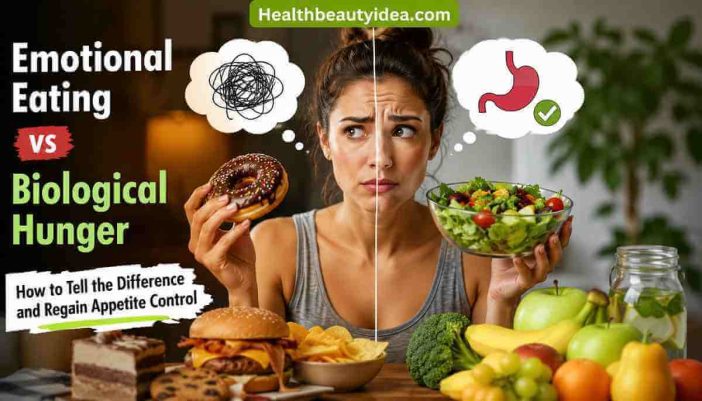
The snack usually appears before the question. A hand reaches for chips after a hard phone call. A spoon digs into ice cream at night when the house is quiet. A person opens a food delivery app, not because dinner was skipped, but because the day felt too heavy to end without comfort.
That moment is often judged too quickly.
“Lack of discipline.”
“Bad habit.”
“Self-sabotage.”
But appetite is rarely that simple. Eating behavior can be driven by physical hunger, emotional distress, blood sugar instability, stress hormones, sleep debt, or a learned reward loop that makes certain foods feel like relief. The real skill is not forcing yourself to ignore every craving. It is learning what kind of signal you are responding to.
Emotional Eating vs Biological Hunger: The Fast Answer
Emotional eating is eating in response to feelings such as stress, boredom, sadness, loneliness, or anxiety. Biological hunger is the body’s physical signal that it needs energy. Emotional hunger often appears suddenly and asks for specific comfort foods, while biological hunger usually builds gradually and can be satisfied by a balanced meal.
Why This Difference Matters for Weight Management
Many people trying to lose weight treat all eating urges the same way.
They either:
- resist everything,
- feel guilty after eating,
- or assume every craving means failure.
That approach usually backfires.
When emotional eating and biological hunger are confused, three problems appear:
- True hunger gets ignored until overeating becomes more likely.
- Emotional needs get treated with food only, so stress remains unresolved.
- Metabolic signals become harder to read, especially when sleep, stress, and blood sugar are unstable.
This is why appetite control is not just mental. It is also biological.
What Biological Hunger Usually Feels Like
Biological hunger is the body’s request for energy.
It often builds gradually and may include:
- stomach emptiness,
- low energy,
- difficulty concentrating,
- mild irritability,
- physical weakness,
- willingness to eat different types of food.
A key clue:
If a balanced meal sounds acceptable, it is more likely to be biological hunger.
Biological hunger is usually less urgent than emotional hunger. It does not always demand one specific food. It tends to become clearer over time rather than appearing like an alarm.
What Emotional Eating Usually Feels Like
Emotional eating is less about energy need and more about regulation.
It may appear when someone feels:
- stressed,
- bored,
- lonely,
- angry,
- overwhelmed,
- tired,
- anxious,
- emotionally numb.
Emotional hunger often has a different pattern:
- it appears suddenly,
- it wants a specific food,
- it feels urgent,
- it continues even after fullness,
- it may bring guilt or regret afterward.
Food becomes a tool for changing an internal state.
That does not make the person weak. It means food has become part of the nervous system’s coping strategy.
Emotional Hunger vs Physical Hunger: Practical Comparison
| Signal | Biological Hunger | Emotional Eating |
|---|---|---|
| Onset | Gradual | Sudden |
| Food preference | Flexible | Specific comfort foods |
| Body location | Stomach, energy, focus | Mind, mood, tension |
| After eating | Satisfaction | Temporary relief, possible guilt |
| Trigger | Time since eating, energy need | Stress, boredom, sadness, anxiety |
| Urgency | Moderate | Strong and immediate |
This table is not meant to diagnose behavior. It is a reflection tool.
The Metabolic Layer: Hunger Is Not Always Emotional
Here is where many articles miss the deeper point.
Some cravings that feel emotional may actually begin biologically.
For example:
- poor sleep can increase hunger signals,
- blood sugar crashes can trigger urgent cravings,
- restrictive dieting can increase food obsession,
- stress can increase reward-driven eating,
- low protein meals can fail to provide lasting satiety.
If someone feels out of control around food, the question should not be only:
“What emotion am I avoiding?”
It should also be:
“What biological system is destabilizing my appetite?”
Our guide on Ghrelin and Hunger Signals explains how hunger hormones can make appetite feel louder after sleep loss, dieting, or stress.
Blood Sugar Crashes Can Mimic Emotional Hunger
A blood sugar crash can feel like emotional hunger because it often arrives with:
- urgency,
- irritability,
- shakiness,
- fatigue,
- cravings for quick carbohydrates,
- mental fog.
Many people reach for sweet or salty foods in that moment because the body wants fast energy.
This is where Insulin Spikes, Cravings, and Energy Crashes becomes highly relevant. If meals repeatedly produce sharp glucose rises and drops, appetite may feel emotionally unstable even when the root issue is metabolic instability.
Stress Eating: When Cortisol Enters the Picture
Stress can change eating behavior in different directions.
Some people lose appetite during acute stress. Others eat more after stress begins to settle. Chronic stress can make high-fat, high-sugar foods more appealing because they offer temporary emotional relief and reward.
This matters because stress eating is not only psychological. It involves:
- cortisol,
- nervous system arousal,
- reward pathways,
- fatigue,
- sleep disruption.
When stress becomes chronic, emotional eating may become a repeated coping loop.
Food works briefly.
The stress returns.
The loop repeats.
Our article on Cortisol and Belly Fat explains how stress physiology can influence cravings, abdominal fat storage, and appetite regulation.
Why Dieting Can Make Emotional Eating Worse
Aggressive dieting can intensify emotional eating because restriction increases psychological and biological pressure at the same time.
Common pattern:
- Strict food rules begin.
- Hunger increases.
- Cravings intensify.
- Stress or fatigue lowers control.
- A “forbidden” food is eaten.
- Guilt follows.
- Restriction restarts.
This is not a sustainable system.
It can also overlap with adaptive thermogenesis, where the body reduces energy expenditure and increases hunger during prolonged restriction.
Emotional Eating Is Not the Same as Binge Eating Disorder
This distinction matters.
Emotional eating is common and does not always mean someone has an eating disorder.
However, professional help may be needed if eating episodes involve:
- feeling unable to stop,
- eating very large amounts rapidly,
- eating in secrecy,
- intense shame,
- frequent loss of control,
- distress that affects daily life.
A qualified clinician, therapist, or registered dietitian can help when eating patterns feel unmanageable.
This article is educational, not a diagnosis.
Original Value Section: The 90-Second Hunger Check
Before eating, pause for 90 seconds and ask five questions.
1. What happened right before this urge appeared?
Was it:
- an argument?
- boredom?
- fatigue?
- a stressful email?
- a skipped meal?
- a poor night of sleep?
2. Would a normal meal satisfy this?
If chicken, eggs, soup, yogurt, rice, vegetables, or a balanced meal sounds acceptable, hunger may be biological.
If only cookies, chips, ice cream, or fast food sound acceptable, emotion or reward craving may be involved.
3. Where do I feel this signal?
Biological hunger often appears in the body:
- stomach,
- energy,
- focus,
- physical weakness.
Emotional hunger often appears in:
- chest tension,
- mood,
- restlessness,
- mental noise,
- urge for comfort.
4. Did I eat enough protein and fiber today?
Low-satiety meals can create strong hunger that looks emotional.
5. What would help if food were not available?
Possible answers:
- sleep,
- a walk,
- a shower,
- talking to someone,
- journaling,
- breathing,
- leaving the room,
- eating a real meal.
This check does not require perfection. It creates a gap between urge and action.
What to Do When It Is Biological Hunger
If the signal is physical hunger, eating is the right response.
Choose a meal or snack that includes:
- protein
- fiber
- healthy fats
- slow-digesting carbohydrates
Examples:
- Greek yogurt with berries and nuts
- eggs with whole-grain toast
- chicken or tofu with rice and vegetables
- oatmeal with protein and chia seeds
- beans with avocado and vegetables
The goal is not restriction.
The goal is steadier satiety.
What to Do When It Is Emotional Eating
If the urge is emotional, food may still be one option, but it should not be the only option.
Try a two-step response:
Step 1: Name the state
Use simple language:
- “I am stressed.”
- “I am lonely.”
- “I am overstimulated.”
- “I am exhausted.”
- “I need comfort.”
Naming the state reduces confusion.
Step 2: Match the need
| Emotional State | Non-Food Support |
|---|---|
| Stress | Walk, breathwork, short reset |
| Loneliness | Message someone, voice note, connection |
| Exhaustion | Rest, earlier bedtime, lower stimulation |
| Anger | Movement, journaling, physical release |
| Boredom | Change environment, task switch |
| Anxiety | Grounding, slow breathing, planning next step |
This is not about banning food. It is about expanding the response menu.
Common Mistakes That Keep the Cycle Going
Mistake 1: Waiting Until Hunger Becomes Extreme
Extreme hunger reduces decision quality.
Mistake 2: Eating Too Little During the Day
Under-eating often leads to nighttime overeating.
Mistake 3: Treating Emotional Eating as Moral Failure
Shame increases stress and often worsens the pattern.
Mistake 4: Ignoring Sleep
Poor sleep makes appetite regulation harder.
Mistake 5: Keeping Only Hyper-Palatable Foods Within Reach
Environment matters. Willpower becomes weaker when triggers are constant.
Trust and Verification Note
Emotional eating exists on a spectrum. Occasional comfort eating is common. Persistent loss of control, intense shame, frequent binge episodes, purging behaviors, or severe distress around food should be discussed with a qualified healthcare provider or mental health professional.
Weight management advice should not replace medical care, therapy, or eating disorder treatment when those are needed.
FAQ
How do I know if I am emotionally eating?
Emotional eating often appears suddenly, feels urgent, and asks for a specific comfort food. It is usually linked to stress, boredom, sadness, loneliness, anxiety, or fatigue rather than gradual physical hunger.
Can emotional eating cause weight gain?
It can contribute to weight gain if it frequently increases total calorie intake. The bigger issue is often the repeated loop of stress, overeating, guilt, and restriction.
Is craving sugar biological or emotional?
It can be either. Sugar cravings may come from stress, habit, sleep deprivation, blood sugar crashes, restrictive dieting, or emotional discomfort. The trigger pattern matters more than the craving itself.
Should I avoid comfort foods completely?
Usually no. Strict avoidance can increase obsession. A better approach is learning when food is meeting physical hunger and when another coping tool may fit the emotional need better
What to Do Next
Emotional eating vs biological hunger is not a battle between mind and body.
It is a signal-reading skill.
Start with one practical rule:
Before eating from urgency, pause and ask:
“Is this hunger, stress, fatigue, or a blood sugar crash?”
That one question can change the next decision.
If the body needs food, feed it properly.
If the nervous system needs relief, support it directly.
If both are involved, respond to both.
The goal is not perfect control.
The goal is clearer communication with your own body.





 Mental Health, Stress & Emotional Wellbeing
 Sleep, Energy & Daily Performance