
At 7 a.m., when the city is buzzing with the aroma of fresh coffee and warm breakfast sandwiches, Maria sits by her window with only water in her hand. For the past 30 days, she has followed a strict fasting schedule: sixteen hours without food, eating only in the remaining eight. The result? Her doctor’s last visit showed reduced blood pressure, improved cholesterol levels, and noticeable weight loss. These numbers are not just Maria’s story. Across the globe, intermittent fasting benefits have become one of the most researched topics in modern nutrition science, with new studies revealing surprising effects on health, aging, and even mental performance.
If you’ve been wondering whether this centuries-old practice is worth the hype, let’s dive deep into seven shocking health secrets backed by the latest 2025 research.
Intermittent Fasting Benefits
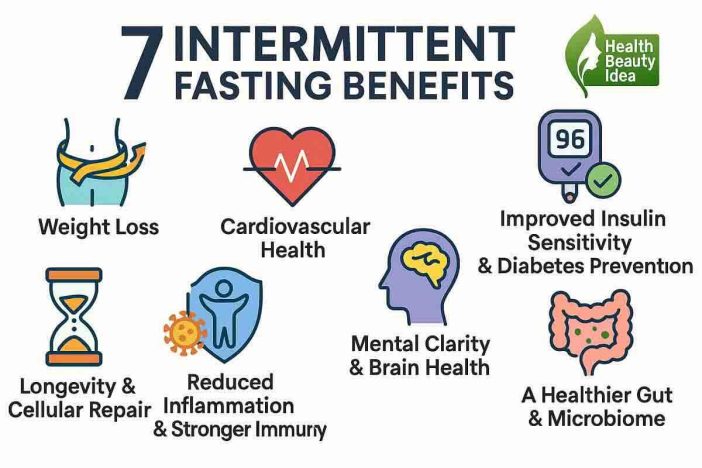
1. Weight Loss That Goes Beyond the Scale
One of the most celebrated intermittent fasting benefits is its effect on weight loss. A 2025 clinical study involving 500 participants found that people following the 16:8 fasting method lost an average of 7–10% of their body weight over three months without strict calorie counting.
Unlike traditional dieting, fasting allows your body to burn stored fat for energy during fasting windows, reducing overall body fat while preserving lean muscle mass. Experts explain that fasting helps lower insulin levels, which signals the body to switch from glucose to fat as its primary energy source—a process called metabolic switching.
Actionable Tip: Start with the 16:8 method: fast for 16 hours (including sleep) and eat during an 8-hour window. For beginners, this might look like eating from noon to 8 p.m.
“For those eager to get started, the beginner-friendly guide Intermittent Fasting Meal Plan for Beginners offers easy-to-follow eating windows, balanced nutrition ideas, and realistic schedules—helping you lose weight effectively while feeling energized.”
2. A Powerful Ally for Heart Health
Heart disease remains the leading cause of death worldwide, but research in early 2025 revealed that intermittent fasting benefits extend to cardiovascular health.
Participants in a six-month study saw a 12% reduction in LDL cholesterol (the “bad” cholesterol) and a 9% drop in blood pressure after adopting alternate-day fasting. Fasting periods improve metabolic health by reducing triglycerides, inflammation markers, and oxidative stress—all major contributors to heart disease.
Real Data: The American Heart Association reported that people practicing intermittent fasting at least five days a week had 17% lower risk factors for cardiovascular events than those on standard diets.
If you’re particularly focused on cardiovascular wellness, the article 4 Best Intermittent Fasting to Lower Cholesterol Fast! dives into how fasting routines can reset metabolism, enhance fat burning, and specifically reduce LDL cholesterol in a heart-protective way.
3. Improved Insulin Sensitivity and Diabetes Prevention
Rising insulin resistance is a ticking time bomb leading to Type 2 diabetes. However, multiple 2025 clinical trials found that fasting periods enhance insulin sensitivity significantly.
During fasting, insulin levels naturally drop, reducing the constant demand on the pancreas to produce insulin. This break helps restore insulin sensitivity, lowering blood sugar levels and reducing diabetes risk.
Example: In a 12-week study, prediabetic adults practicing intermittent fasting saw fasting glucose levels fall by 15%, while HbA1c (a long-term blood sugar marker) improved by 12%.
4. Longevity and Cellular Repair
Scientists are fascinated by fasting’s link to longevity. Animal studies show that intermittent fasting activates autophagy—a cellular “cleanup” process where damaged cells are removed and replaced with healthier ones.
Human research in 2025 revealed that fasting increases human growth hormone (HGH) production by up to 300% in men and 1,200% in women after 24 hours of fasting. HGH plays a vital role in fat metabolism, muscle growth, and anti-aging processes.
Actionable Tip: Include at least one 24-hour fast per month under professional guidance to boost autophagy and cellular repair.
For readers intrigued by how fasting impacts aging, the post Intermittent Fasting and Longevity unpacks breakthroughs in cellular renewal, anti-aging benefits, and practical tips to promote vitality well into your later years—all backed by emerging studies on lifespan extension.
5. Mental Clarity and Brain Health
Have you ever felt mentally sharper after skipping breakfast? Research suggests this isn’t your imagination. Intermittent fasting benefits include boosting mental clarity and cognitive function.
Studies show fasting increases brain-derived neurotrophic factor (BDNF), a protein linked to learning, memory, and new neuron growth. Higher BDNF levels are associated with reduced risk of neurodegenerative diseases like Alzheimer’s.
Real Data: A 2025 neuroscience trial reported a 20% improvement in memory test scores among intermittent fasters after eight weeks compared to a control group.
6. Reduced Inflammation and Stronger Immunity
Chronic inflammation is the root cause of many diseases, from arthritis to cancer. Intermittent fasting has been shown to lower C-reactive protein (CRP) levels—a key inflammation marker.
Research found that participants practicing intermittent fasting three times per week had 30% lower CRP levels after two months, reducing long-term risks of autoimmune and inflammatory conditions.
7. A Healthier Gut and Microbiome
Emerging studies highlight fasting’s effect on gut health. When you stop eating, your digestive system gets a much-needed break, allowing beneficial gut bacteria to thrive.
A 2025 study on the gut microbiome revealed that intermittent fasting increased the diversity of good bacteria by 18%, improving digestion, immunity, and even mood regulation through the gut-brain axis.
To deepen your understanding of digestive benefits, the post Intermittent Fasting and Gut Health explores how fasting supports microbiome diversity, nurtures beneficial bacteria, and helps you achieve a healthier, balanced gut environment.
Potential Side Effects and Who Should Avoid It
While intermittent fasting benefits are impressive, it’s not for everyone. Pregnant women, individuals with eating disorders, those with certain medical conditions, or people on specific medications should consult a doctor before starting.
Some common side effects include headaches, dizziness, or overeating during eating windows. These usually subside as your body adapts.
How to Start Safely: Expert Tips
- Begin Slowly: Start with 12:12 fasting before progressing to 16:8 or 5:2 schedules.
- Stay Hydrated: Drink water, herbal teas, or black coffee during fasting hours.
- Eat Nutrient-Dense Meals: Focus on lean proteins, vegetables, healthy fats, and whole grains during eating windows.
- Listen to Your Body: Stop fasting if you feel unwell or overly fatigued.
- Combine with Exercise: Light to moderate exercise enhances fat-burning effects.
The Future of Intermittent Fasting
Ongoing clinical trials are exploring fasting’s role in cancer therapy, mental health treatments, and longevity research. With the current momentum, intermittent fasting could become a mainstream preventive health strategy within the next decade.
Final Thoughts
The intermittent fasting benefits revealed by 2025 research are nothing short of transformative. From weight loss and cardiovascular health to mental clarity and longevity, fasting offers a simple yet powerful tool for better health.
But like any lifestyle change, it works best when personalized. Consult your healthcare provider, start gradually, and let science—not trends—guide your journey toward a healthier, longer life.



 Skincare Solutions & Skin Health
 Mental Health, Stress & Emotional Wellbeing
 Sleep, Energy & Daily Performance