
Remember, the amount of sleep needed can vary among individuals, but most adults require around 7-9 hours of quality sleep each night. Prioritizing sleep and rest as part of your daily routine not only supports hair health but also enhances overall well-being.
If you’re experiencing persistent sleep issues, it’s advisable to consult with a medical practitioner to address any underlying conditions or concerns
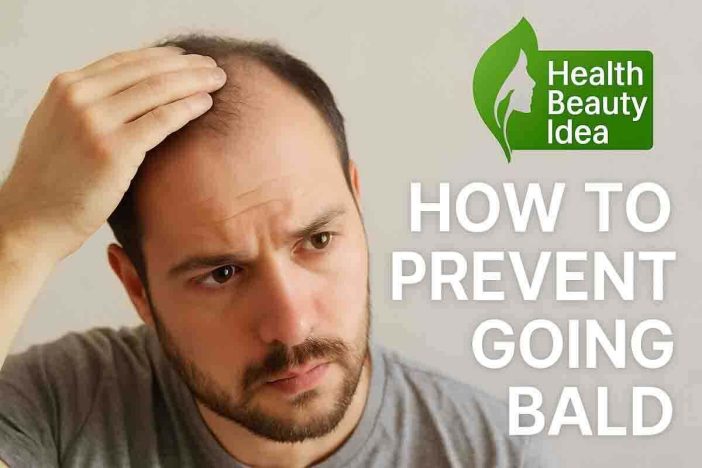
How To Prevent Going Bald
1) Know Your Hair-Loss Type (So You Treat the Right Problem)
Most cases fall into:
- Androgenetic alopecia (pattern baldness): gradual recession at temples/crown (men) or diffuse thinning (women).
- Telogen effluvium: sudden shedding after stress, illness, crash diet, or hormonal shifts.
- Alopecia areata: patchy loss from autoimmune activity.
- Traction alopecia: tight styles pulling hairline.
Action: If shedding is sudden, patchy, or accompanied by scalp symptoms (pain, scaling, redness), see a dermatologist before self-treating.
For readers noticing gradual thinning, our guide How to Prevent Thinning Hair explains daily habits and product choices that protect fragile strands before they miniaturize.
2) Fix High-Impact Lifestyle Factors
- Protein first. Hair is keratin—aim 0.8–1.0 g protein/kg/day from eggs, fish, poultry, legumes.
- Micronutrients that matter: iron, vitamin D, zinc, biotin (deficiency-related), omega-3. Prefer food sources; supplement only after lab confirmation.
- Manage stress. Chronic cortisol pushes follicles into the resting (telogen) phase. Use 10-minute daily breathwork, yoga, or walking.
- Sleep 7–9 hours. Deep sleep supports hormone balance and follicle repair.
- Quit smoking. It impairs scalp microcirculation and collagen.
3) Upgrade Your Scalp Routine (Gentle, Consistent, Targeted)
- Choose mild, sulfate-free shampoo 2–4×/week; keep scalp clean to reduce inflammation and buildup.
- Condition mid-lengths to ends; avoid heavy residue at roots.
- Weekly scalp massage (5–10 minutes) with fingertips; improves microcirculation.
- Heat with restraint. Lower temps, use heat protectant, and air-dry when possible.
- Looser styles. Avoid tight ponytails/braids; traction damage is preventable.
Curious about oils? Learn when Coconut Oil Benefits for Hair actually help—plus when to skip them if buildup worsens shedding.
4) Evidence-Based Topicals & Devices
- Minoxidil (2–5%): first-line for men & women; expect 3–6 months for visible change, continued use to maintain.
- Finasteride (oral, men): reduces DHT; discuss risks/benefits with a clinician.
- Low-Level Laser Therapy (LLLT): home caps/combs 3–4×/week may increase density when used consistently.
- Anti-inflammatory scalp tonics (e.g., salicylic acid, ketoconazole shampoo weekly) can help if buildup or dandruff co-exists.
Tip: Introduce one active at a time for 8–12 weeks so you can judge effect and tolerance.
Before starting treatment, review dermatologist-backed guidance from the American Academy of Dermatology to understand expectations, safety, and timelines.
5) When to Consider In-Clinic Treatments
- PRP (Platelet-Rich Plasma): series of injections using your own platelets to signal follicle repair; often 3–4 sessions, maintenance every 6–12 months.
- Microneedling (professional): can enhance topical absorption and growth signals.
- Hair transplant: for stabilized pattern loss; choose board-certified surgeon, review donor density, and long-term plan.
If dullness accompanies shedding, see our step-by-step routine in Get Back Your Healthy and Shining Hair to restore shine while you treat loss.
6) Nutritional Pattern That Supports Hair
Build plates around:
- Protein: eggs, fish, poultry, tofu, Greek yogurt.
- Iron & zinc: lean red meat, shellfish, legumes, pumpkin seeds.
- Vitamin D & omega-3: salmon, sardines, fortified dairy, sun (safe exposure).
- Vitamin C & antioxidants: citrus, berries, peppers, leafy greens (support collagen).
- Whole grains & nuts: steady energy for growth cycles.
Avoid: crash diets, extreme deficits, and ultra-processed foods that displace nutrient-dense options.
7) Red Flags You Should Not Ignore
- Rapid, patchy loss; scarring; pain; intense scaling; eyebrow/eyelash loss; or systemic symptoms (fatigue, anemia signs). These warrant medical evaluation and possibly labs (iron studies, ferritin, thyroid, vitamin D, zinc).
Frequently Asked Questions (FAQs) About How to Prevent Going Bald
How long until I see results?
Topicals (minoxidil) 3–6 months; LLLT 3–6 months; finasteride 3–12 months; PRP after 2–3 sessions. Early photos help track progress.
Can hair grow back once follicles are ‘dead’?
Miniaturized follicles can often thicken with treatment; scarred follicles cannot regrow. Early action is key.
Does stress really cause baldness?
Yes—telogen effluvium is common after major stress. The good news: it’s often reversible once triggers are controlled.
Are ‘natural oils’ enough?
Oils (e.g., rosemary) may support scalp comfort and microcirculation but work best as adjuncts to evidence-based care.




 Skincare Solutions & Skin Health
 Mental Health, Stress & Emotional Wellbeing
 Sleep, Energy & Daily Performance