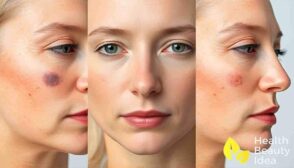

A damaged skin barrier is not a diagnosis you can confirm from one symptom or a viral checklist. But a sudden cluster of tightness, stinging, roughness, redness, and reduced tolerance to products can be a useful signal that your routine needs to become simpler, not stronger.
When a Familiar Routine Suddenly Stops Feeling Normal
Skin problems often become complicated quietly.
Perhaps you added an exfoliating acid because your pores looked congested. A few nights later, you introduced retinol. Then came a brightening serum. When your face began to feel tight, you tried another moisturizer to compensate.
Individually, each product may have made sense. Together, the routine may have pushed your skin beyond what it could comfortably tolerate.
That is the difficult part about skin-barrier problems: the response can look like a need for more skincare when the better first move may be less.
Before treating every new bump as acne or every flaky patch as simple dryness, it helps to understand what the barrier is actually doing.
What Your Skin Barrier Is Protecting
The skin barrier is largely associated with the stratum corneum, the outermost portion of the epidermis. It is often described as a brick-and-mortar structure: skin cells form the “bricks,” while lipids surrounding them help form the “mortar.”
Those lipids include ceramides, cholesterol, and fatty acids.
A healthy outer barrier helps limit excessive water loss while reducing penetration of irritants and other substances from the environment. DermNet describes the stratum corneum as central to controlling transepidermal water loss and chemical penetration through the skin.
This explains why barrier stress can create seemingly contradictory symptoms. Skin may feel dry because it is losing water more easily, yet an oily area can still produce sebum. The issue is not necessarily that your skin has suddenly changed “type.”
If that distinction sounds familiar, understanding dry vs dehydrated skin can help separate a long-standing tendency toward dryness from a temporary change in hydration and comfort.
7 Signs Your Skin Barrier May Be Damaged
No single symptom proves that your barrier is damaged. What matters more is a change from your normal baseline, especially when several symptoms appear together after irritation or a major routine change.
1. Products that used to feel comfortable suddenly sting
One of the more useful clues is a change in tolerance.
A moisturizer, cleanser, or serum that previously caused no discomfort may suddenly produce burning or stinging. Even water can feel unpleasant on very irritated skin.
That does not identify the exact cause, but it is a good reason to stop introducing new products and reassess what changed.
2. Your skin feels tight soon after cleansing
A cleanser should remove what needs to be removed without leaving skin feeling painfully tight or stripped.
If tightness developed after switching cleansers, increasing cleansing frequency, using hotter water, or combining cleansing with aggressive exfoliation, your routine may be removing more surface lipids than your skin currently tolerates.
3. Flaking and roughness persist despite moisturizer
Dryness that improves after applying moisturizer is common.
Barrier stress can be more frustrating. Moisturizer may provide temporary comfort, yet rough patches, flaking, or tightness quickly return because the underlying routine continues to promote irritation or water loss.
4. Redness or reactivity is new for you
Sudden redness after products, weather exposure, shaving, or washing may reflect irritation.
However, redness is not specific to barrier damage. Rosacea, eczema, contact dermatitis, allergic reactions, infections, and other skin conditions can also cause redness.
The important clue is not redness alone. It is whether your skin has become noticeably less tolerant than usual.
5. Your skin feels itchy or unusually tender
Itching and tenderness can accompany irritated skin, particularly when there is visible dryness or inflammation.
Persistent or intense itching deserves more caution because it can also occur with eczema, allergic contact dermatitis, infections, and other conditions that cannot be diagnosed through a skincare routine.
6. Breakouts appear alongside irritation after adding multiple actives
Acne alone is not evidence of a damaged barrier.
But if new bumps appeared soon after you started stacking exfoliating acids, retinoids, scrubs, or other potentially irritating treatments—and those bumps arrived with burning, peeling, or redness—the routine itself deserves scrutiny.
Do not automatically label this pattern “purging.” Continuing an irritating product because you assume worsening skin is part of the process can prolong the problem.
7. Your skin suddenly tolerates less than it used to
Cold wind feels harsher. Shaving burns more. Products that were unremarkable now feel uncomfortable. Your usual routine requires constant adjustment.
This broad loss of tolerance is often more informative than any one visible symptom.
Cleveland Clinic similarly lists dryness, scaling, irritation, itching, rough patches, acne, and increased sensitivity among possible signs of barrier dysfunction.
Use the Barrier Triage Before Buying Another Product
When irritated skin becomes confusing, use four questions before changing your routine again.
Question 1: What changed immediately before the problem?
Look back over the previous days or weeks.
Did you start:
- a retinoid?
- an exfoliating acid?
- a facial scrub?
- benzoyl peroxide?
- a stronger cleanser?
- several new products at once?
- more frequent cleansing?
- longer or hotter showers?
- a new shaving or hair-removal routine?
A timeline often tells you more than a product label.
Question 2: Has your tolerance changed?
Long-standing dry skin and sudden barrier stress are not identical problems.
If your face has always been dry, that is one pattern. If a moisturizer you used comfortably for six months suddenly burns after three nights of aggressive exfoliation, that is a different pattern.
Question 3: Is there a cluster of symptoms?
A single pimple is weak evidence.
A new combination of stinging + tightness + flaking + redness after a routine change is more meaningful and gives you a stronger reason to simplify.
Question 4: Could this be something other than skincare irritation?
This is the most important question.
A spreading rash, marked swelling, blisters, crusting, oozing, intense itching, persistent redness, or recurring symptoms may point to something that needs clinical assessment rather than another moisturizer.
Barrier stress, dryness, dehydration, or something else?
| Pattern | What may stand out | What to do first |
|---|---|---|
| Naturally dry skin | Long-standing tendency toward roughness or low oiliness | Use a gentle routine and richer moisturization |
| Dehydrated-feeling skin | Temporary tightness or reduced comfort that can occur even with oily skin | Review cleansing, environment, hydration-supportive skincare, and irritating products |
| Barrier stress | Sudden stinging, tightness, flaking, redness, or reduced product tolerance | Simplify the routine and remove likely irritants |
| Possible dermatitis or other skin condition | Persistent rash, significant itching, swelling, recurring inflammation, oozing, or worsening symptoms | Seek professional assessment rather than relying on self-diagnosis |
This table is a decision aid, not a diagnostic tool.
What Commonly Weakens the Skin Barrier
Barrier damage is rarely caused by one universally “bad” ingredient. More often, it results from a mismatch between product intensity, frequency, combinations, and individual tolerance.
Over-exfoliating
Exfoliation is not inherently harmful. The problem is frequency and cumulative irritation.
Using an acid toner, exfoliating serum, peel, scrub, and retinoid in the same routine can expose skin to far more irritation than the product names individually suggest.
The American Academy of Dermatology warns that overusing exfoliating products can damage the skin’s protective barrier and leave skin raw or irritated.
Cleansing too aggressively
Long washing sessions, very hot water, harsh soaps, and repeated cleansing can all contribute to dryness and irritation.
“Clean” skin does not need to feel squeaky.
A well-structured basic skin care routine should remove sunscreen, makeup, sweat, and debris without turning cleansing into a daily stress test.
Stacking too many active ingredients
More actives do not necessarily create faster progress.
Retinoids, exfoliating acids, acne medications, and certain brightening treatments can each have a legitimate place in skincare. Problems often begin when several are introduced simultaneously or increased too quickly.
Friction and mechanical irritation
Scrubbing with towels, cleansing brushes, abrasive exfoliants, shaving, masks, and frequent touching can all add physical irritation.
If your skin is already inflamed, even habits that normally feel harmless may become uncomfortable.
Weather and indoor environments
Cold weather, wind, low humidity, air-conditioning, and indoor heating can increase the challenge of keeping skin comfortable.
Your routine may therefore need to change with the environment rather than remain identical year-round.
Underlying skin conditions
Eczema, rosacea, psoriasis, contact dermatitis, and other dermatologic conditions can impair barrier function or resemble what people casually call a “damaged barrier.”
This is one reason barrier-care advice should not become a substitute for diagnosis.
How to Repair a Damaged Skin Barrier Without Over-Treating It
The objective is not to find a miracle “barrier repair” serum. It is to reduce unnecessary stress while supporting the basic functions your skin already performs.
Step 1: Pause unnecessary irritants
If irritation began after you introduced multiple nonessential active products, consider temporarily simplifying them.
Common candidates include scrubs, peels, exfoliating acids, strong toners, and newly added actives that clearly coincide with irritation.
Prescription medications are different. If a prescribed topical treatment is causing significant irritation, contact the prescribing clinician rather than making major changes without guidance.
Step 2: Use the gentlest cleanser that does the job
Choose a cleanser that removes what you need to remove without persistent tightness or burning.
Use lukewarm rather than very hot water, and avoid scrubbing.
Some people need twice-daily cleansing. Others with dry or highly reactive skin may find that their morning routine can remain simpler. Your needs also change with exercise, sunscreen, makeup, and environmental exposure.
Step 3: Moisturize before your skin feels desperate for it
Moisturizer is one of the highest-value steps in a barrier-focused routine.
Applying it while skin remains slightly damp can help retain water. Formulas containing combinations of humectants, emollients, or occlusive ingredients may be useful depending on skin type and tolerance.
If your skin has become unusually reactive, a simpler fragrance-free formula may be easier to tolerate than one packed with botanical extracts and multiple actives.
Step 4: Keep sun protection in the routine
Irritated skin may tempt you to eliminate everything, including sunscreen.
Sun protection still matters. The American Academy of Dermatology recommends broad-spectrum, water-resistant sunscreen with SPF 30 or higher for exposed skin.
If your usual sunscreen suddenly stings, the answer is not necessarily to abandon protection indefinitely. Try to identify a more tolerable formulation while using shade, clothing, and other sun-protective measures.
Step 5: Reduce friction
Use your hands rather than abrasive cleansing tools. Pat rather than rub aggressively with a towel.
If shaving or another grooming step is making irritation worse, adjust the technique or frequency while skin recovers.
Step 6: Stop changing products every few days
Barrier recovery becomes impossible to evaluate when the routine changes constantly.
Keep the number of variables small. If comfort begins to return, resist the urge to immediately reintroduce everything you were using before.
Step 7: Reintroduce products one at a time
Once your skin feels consistently comfortable, reintroduce nonessential products gradually.
The American Academy of Dermatology suggests testing a skincare product on a small area twice daily for seven to 10 days before using it more broadly when you are concerned about a possible reaction.
A cautious reintroduction also makes troubleshooting easier: if irritation returns, you have a much better idea which change triggered it.
If reactivity is a long-term pattern rather than a temporary episode, a skincare routine for sensitive skin may be a better framework than repeatedly cycling through “repair” products.
Barrier-Supporting Ingredients: What They Can and Cannot Do
The word “barrier” is now printed on cleansers, serums, creams, masks, and treatments. That does not mean you need an entire barrier-branded routine.
Look at the function of an ingredient rather than the marketing category.
| Ingredient or ingredient group | Why it may be useful | Keep expectations realistic |
|---|---|---|
| Ceramides | Ceramides are naturally part of the lipid matrix of the stratum corneum | A ceramide label does not automatically make every formulation suitable for your skin |
| Cholesterol and fatty acids | Also contribute to the skin’s lipid environment | Formulation matters more than collecting every lipid in separate products |
| Glycerin | Humectant that helps attract water | Hydration support does not remove the source of ongoing irritation |
| Petrolatum | Strong occlusive that can reduce water loss | Its heavier texture may not suit every preference or area |
| Hyaluronic acid | Humectant commonly used for hydration | It is not, by itself, a complete “barrier rebuild” treatment |
| Niacinamide | Can be included in barrier-supportive and oil-control routines | Higher concentrations can be irritating for some people, especially when skin is already reactive |
If oily skin makes you hesitant to moisturize, our guide to niacinamide for oily skin explains how the ingredient can fit into a routine. During an active irritation episode, however, tolerance matters more than following an ingredient trend.
The Stop, Keep, or Reconsider Test
Barrier care gets easier when you make decisions by function rather than product category.
| Situation | First decision |
|---|---|
| Your acid serum now burns and your face is peeling | Pause the nonessential irritant and simplify |
| A gentle moisturizer feels comfortable | Keep it rather than shopping for a more complicated replacement |
| Your cleanser leaves skin tight after every wash | Reconsider the cleanser or cleansing method |
| Sunscreen stings | Reconsider the formulation, but maintain sun protection through a tolerable product and physical measures |
| Five active products were added within one week | Reduce variables instead of troubleshooting all five at once |
| A prescription causes significant irritation | Contact the prescriber rather than improvising around the medication |
| A rash is spreading or repeatedly returning | Seek professional assessment instead of assuming barrier damage |
This is the core principle of barrier-first skincare: protecting the stratum corneum does not require buying products labeled “barrier repair.”
Sometimes the highest-value intervention is simply removing the thing that is continuing to irritate your skin.
How Long Does Skin Barrier Recovery Take?
Be cautious with exact countdowns.
You may see claims that every damaged barrier takes a fixed number of days or that one complete skin-turnover cycle guarantees recovery. Human skin does not behave that predictably.
Recovery time depends on what caused the disruption, how severe the irritation is, whether the trigger is still present, your environment, the products you continue using, and whether an underlying skin condition is involved.
Comfort may improve before every visible sign disappears. Conversely, persistent redness or scaling can remain because the problem was never simply barrier damage in the first place.
A more useful question than “How many days will this take?” is:
Is my skin becoming progressively more comfortable after I removed the likely trigger and simplified my routine?
If the answer is no—or symptoms are worsening—professional evaluation becomes more valuable than extending an online recovery timeline.
When “Damaged Skin Barrier” May Be the Wrong Label
Social media has turned “skin barrier” into a convenient explanation for nearly every episode of redness, acne, or dryness.
That can be misleading.
Irritant contact dermatitis
A product can directly irritate skin, particularly after repeated exposure or when several irritating products are combined.
Allergic contact dermatitis
An allergy involves a different mechanism and may require identifying the responsible allergen. Continuing exposure can keep the reaction active even if you add soothing products.
Eczema
Eczema is associated with barrier dysfunction, but it is a medical condition—not simply a skincare routine gone wrong.
Rosacea
Burning, stinging, flushing, and sensitivity can occur with rosacea. Treating it as generic barrier damage may delay appropriate care.
Acne
Acne and barrier irritation can coexist, but acne itself does not prove that the barrier is damaged.
That distinction matters because stopping every acne treatment indefinitely may not solve the underlying acne problem.
When to See a Dermatologist
Self-care is reasonable for mild irritation with an obvious trigger that improves after you simplify your routine.
Professional assessment becomes more important if you have:
- symptoms that continue or worsen despite simplifying your skincare;
- persistent or intense itching;
- painful cracks or bleeding;
- oozing, crusting, or signs of possible infection;
- a widespread or rapidly spreading rash;
- recurring episodes with no clear trigger;
- significant swelling;
- eye or lip involvement;
- severe acne or another skin condition that also requires treatment.
Sudden facial or throat swelling or difficulty breathing after exposure to a product can indicate a serious allergic reaction and requires urgent medical care.
An article can help you make safer skincare decisions, but it cannot tell from symptoms alone whether you have eczema, rosacea, dermatitis, an allergy, or another condition.
A Calmer Routine Is Often the Repair Strategy
A damaged skin barrier does not call for the longest routine you can assemble.
Start by looking for what changed. Remove unnecessary irritation. Cleanse gently. Moisturize consistently. Maintain sun protection. Then give your skin enough stability to show you whether those changes are helping.
Once your skin is comfortable again, rebuild from a basic skin care routine instead of restoring every serum at once.
The bigger lesson extends beyond barrier repair: skincare works better when every product has a clear job. If your routine has become a cycle of irritation followed by another corrective product, simplifying it is not doing less for your skin—it is removing obstacles to normal function.
This article is for general education and does not diagnose skin disease. Persistent, severe, unusual, or worsening symptoms should be evaluated by a qualified healthcare professional.