
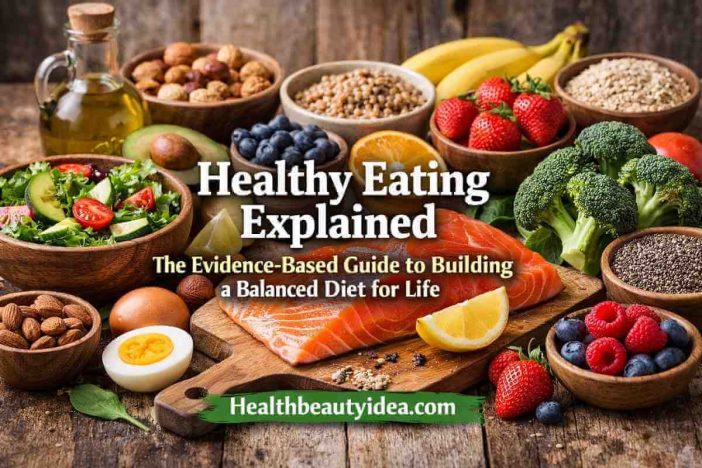
Healthy Eating Is Not a Diet—It’s a System
Most people don’t fail at healthy eating because they lack discipline. They fail because they are given fragmented advice—eat less carbs today, avoid fat tomorrow, fast next week—without understanding how nutrition actually works in the body.
Healthy eating is not a temporary plan or a restrictive challenge. It is a system. A framework that helps you decide what to eat, how much to eat, and how often—based on biology, lifestyle, and long-term health goals.
This systems-based approach also explains why the debate between diet vs exercise often misses the bigger picture of sustainable weight management.
After reviewing hundreds of nutrition studies and real-world eating patterns, one pattern consistently emerges: people succeed when healthy eating becomes simple, flexible, and repeatable. This guide is built around that principle.
What Healthy Eating Really Means (According to Science)
At its core, healthy eating means:
- Providing the body with adequate macronutrients (carbohydrates, protein, fat)
- Meeting micronutrient needs (vitamins and minerals)
- Supporting digestion, metabolism, and hormonal balance
- Being sustainable over months and years—not days
Nutrition also interacts closely with mood and appetite regulation, which is why stress management techniques matter when you’re trying to eat consistently.
Healthy eating does not require perfection. It requires consistency.
International nutrition guidelines consistently emphasize whole foods, balanced meals, and dietary patterns that reduce chronic disease risk—rather than rigid food rules or elimination without reason.
Understanding Macronutrients Without Confusion
Carbohydrates: Fuel, Not the Enemy
Carbohydrates are the body’s primary energy source. The problem is not carbs themselves, but refined, low-fiber sources that spike blood sugar without providing lasting nutrition.
Better choices include:
- Whole grains
- Fruits
- Vegetables
- Legumes
Protein: The Foundation of Satiety and Repair
Protein supports muscle maintenance, immune function, and appetite control. Most adults benefit from spreading protein intake evenly across meals rather than consuming it all at once.
Sources can include:
- Fish, eggs, poultry
- Dairy or fortified alternatives
- Plant proteins such as lentils and tofu
Fat: Essential for Hormones and Nutrient Absorption
Healthy fats help absorb fat-soluble vitamins and support brain health. The key is choosing unsaturated fats more often than highly processed ones.
Micronutrients Most People Overlook
Even people who eat “clean” often fall short on key micronutrients. In practice, the most common gaps include:
- Vitamin D
- Iron
- Magnesium
- Vitamin B12
These deficiencies don’t always cause immediate symptoms, but over time they affect energy, focus, immunity, and overall well-being. Addressing them usually starts with food first, not supplements.
If you want a clear, evidence-based breakdown of the most common gaps (and the best food-first fixes), start with our micronutrient deficiencies guide.
The Plate Method: A Practical Way to Build Balanced Meals
Instead of counting calories, many nutrition professionals rely on the plate method:
- Half the plate: vegetables and fruits
- One quarter: protein
- One quarter: carbohydrates
- Add a small amount of healthy fat
This approach works because it:
- Automatically balances macronutrients
- Encourages fiber intake
- Reduces overeating without restriction
It is one of the most effective tools for long-term healthy eating adherence.
Healthy Eating Patterns That Actually Work
No single diet works for everyone, but several patterns consistently rank high for health outcomes:
Mediterranean-Style Eating
Emphasizes vegetables, olive oil, fish, whole grains, and moderate portions. Strongly associated with heart and metabolic health.
Dietary patterns that reduce inflammation may also support clearer skin, which is why nutrition plays a role in how to prevent acne beyond topical skincare alone.
Plant-Focused Eating
Centers meals around plants while allowing flexibility. Works best when protein and micronutrient needs are intentionally met.
Anti-Inflammatory Eating
Focuses on foods that reduce chronic inflammation, such as fatty fish, leafy greens, berries, and nuts.
Meal Planning for Real Life (Not Ideal Life)
Healthy eating often breaks down when life gets busy. The most successful eaters use simple systems, not willpower.
Meal timing, sleep, and daily routines are regulated by the circadian rhythm, which influences hormones, energy levels, and metabolic efficiency.
Practical Tips That Work
- Repeat meals you enjoy
- Prepare ingredients, not full meals
- Keep a short grocery list
- Build meals around protein first
This is also where tools such as meal-planning apps, kitchen scales, or food storage containers can quietly improve consistency—without turning nutrition into a chore.
Common Healthy Eating Myths That Cause More Harm Than Good
- “Detox diets cleanse the body.” The liver and kidneys already do this job.
- “Superfoods fix everything.” No single food compensates for an unbalanced diet.
- “Restriction equals discipline.” Over-restriction often leads to rebound overeating.
Healthy eating thrives on moderation, not extremes.
Many people struggle not because healthy eating doesn’t work, but because they apply it inconsistently or with unrealistic expectations—factors explored in why weight loss often feels more difficult than it should.
Expert Insight: How I Evaluate a “Healthy Diet”
When reviewing eating patterns, I use three filters:
- Can it be sustained for years?
- Does it meet nutrient needs without obsession?
- Does it support daily life, not dominate it?
If the answer to any of these is “no,” it usually fails in the real world—regardless of how popular it looks online.
Who Should Be Careful With Dietary Changes
Certain groups should approach dietary changes more cautiously:
- Pregnant or breastfeeding individuals
- People with chronic conditions
- Older adults
In these cases, healthy eating should focus on adequacy and safety rather than experimentation.
Frequently Asked Questions About Healthy Eating
Is healthy eating expensive?
Not necessarily. Planning, seasonal foods, and simple meals often reduce food costs.
Do I need supplements to eat healthy?
Most nutrients should come from food first. Supplements may help in specific cases but are not a substitute for balanced eating.
How long before results appear?
Many people notice energy and digestion improvements within weeks, while long-term benefits build gradually.
Bottom Line: Healthy Eating Is a Skill You Build
Healthy eating is not something you “start” and “stop.” It is a skill developed over time through better decisions, small adjustments, and consistent habits.
When you understand how food works—and apply that knowledge in a flexible way—healthy eating becomes less stressful and far more effective. This guide is meant to be your foundation, not your finish line.
Explore more evidence-based guides across our Nutrition & Functional Foods hub to build sustainable habits that support long-term health.
Reference
- World health nutrition guidelines
- Public health dietary pattern research


 Skincare Solutions & Skin Health
 Mental Health, Stress & Emotional Wellbeing
 Sleep, Energy & Daily Performance